

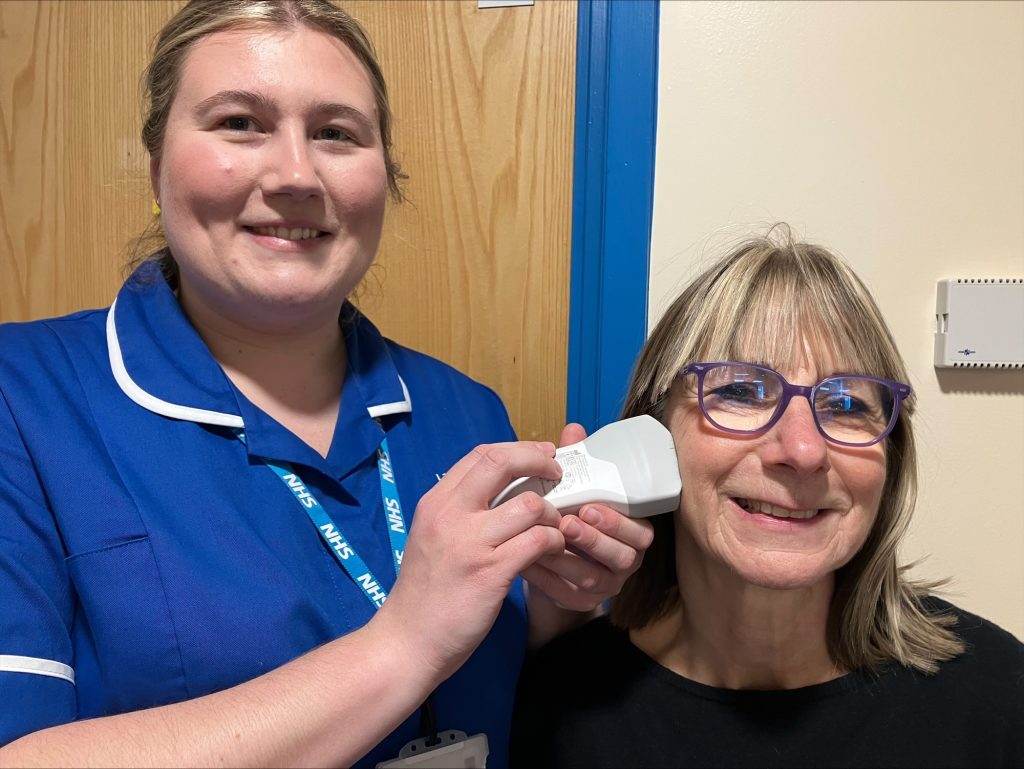
All Botox treatment at the Royal Preston Hospital will now be ultrasound guided for improved efficacy, safety and patient comfort.
Lancashire Teaching Hospitals Charity (LTHC) has spent more than £14,000 on two portable butterfly ultrasound machines and a hand-held ultrasound scanner for the hospital’s Neurology Department that together will benefit more than 3,000 patients annually, who receive Botox injections as either in or out-patients.
The injections are prescribed most often to manage stiff muscles (spasticity), involuntary muscle spasms (dystonia) and excessive saliva (sialorrhea) linked to brain and spinal cord damage caused either by injury or diseases such as Parkinson’s, Motor Neurone Disease (MND), Multiple Sclerosis (MS) and stroke.
Advanced specialist practitioner in spasticity Louise Brown, who applied to LTHC for the funds for the butterfly ultrasound machines, explained: “Botox is injected directly into the affected muscles or glands to reduce patients’ symptoms – pain, involuntary movement, abnormal positions, soft tissue changes, excess saliva and respiratory problems – with minimal side-effects. As a medication, Botox can improve function, independence and quality of life.
“The key to effective Botox treatment is to ensure it is injected into the correct place for optimal therapeutic benefit and to reduce the risk of unintended harm. This is best achieved by using equipment to guide injections and the most effective guidance method is ultrasound.”
Louise added: “Ultrasound gives a clear image of the muscles and glands allowing precise needle placement and is replacing guidance by electromyography (EMG) machine, which could be painful for patients and was also limited in that EMG guidance was unsuitable for use on patients fitted with pacemakers and brain implants and couldn’t be used for injections into salivary glands”
Joanna Allitt, fundraising manager for LTHC, said: “We’re delighted to support this project. It benefits all the Royal Preston Hospital’s Botox patients, including those who receive their treatment on domiciliary visits to their own homes, as both the butterfly machines and scanner are totally portable.
“In improving the efficacy of Botox treatment, clear ultrasound guidance also reduces the risk of side-effects and so improves patient safety. It also has the potential to save the hospital money by extending the time to re-treatment and dose requirements may also be reduced, making the two machines and scanner very worthwhile.”